
History of Wilton
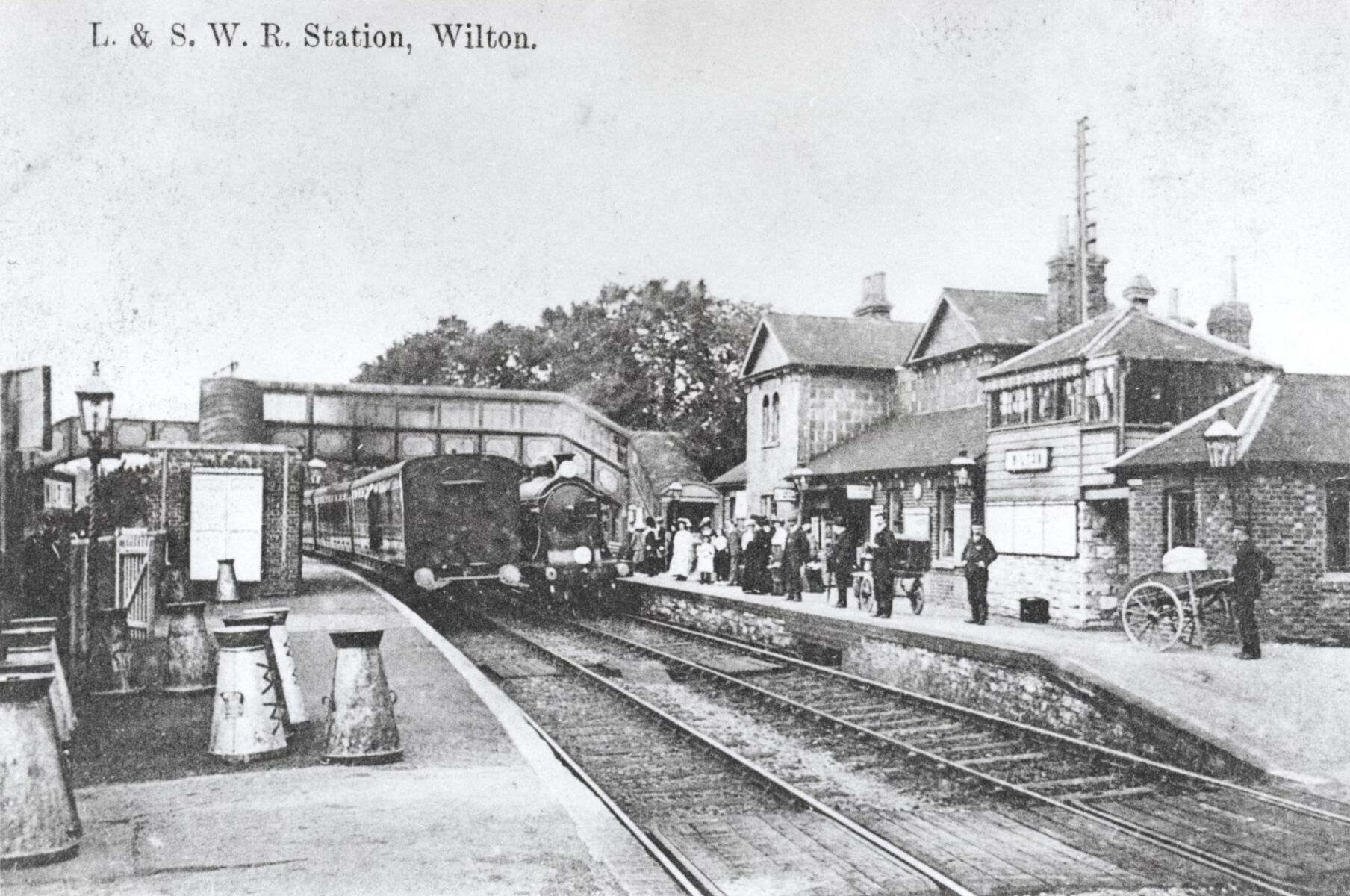
Wilton, an ancient capital of Wessex, is a quintessential English market town redolent with history spanning more than 2000 years. The town gave its name to Wiltshire and the famous Wilton Carpets, which are still made here today.
Wilton takes its name from the River Wylye as the peoples who lived alongside it were known in Anglo-Saxon as “Wilsaetes” and the town lies 3 miles west of Salisbury, located at the confluence of the Wylye and Nadder rivers and has a number of independent shops.
In 771 the predecessor of Wilton Abbey was founded in the location of what is now Wilton House. It became a school of learning for the daughters of Saxon nobles. Wilton Abbey continued on until the dissolution of the monasteries, when Henry VIII gave the land associated with the abbey to William Herbert later 1st Earl Pembroke.
With the loss of the abbey and the expansion of Salisbury, Wilton could not recover its former glory, and it wasn’t until the 9th Earl of Pembroke smuggled two French carpet weavers into the town that Wilton recovered some prosperity by producing unique carpets known as the Wilton weave. The Old Factory is now Wilton Village, a collection of local independent shops, cafes and other businesses.
Market day is Thursday and, with free parking in our South Street Car Park, you have easy access to the wide range of traditional family-owned shops, pubs, cafés and other services.
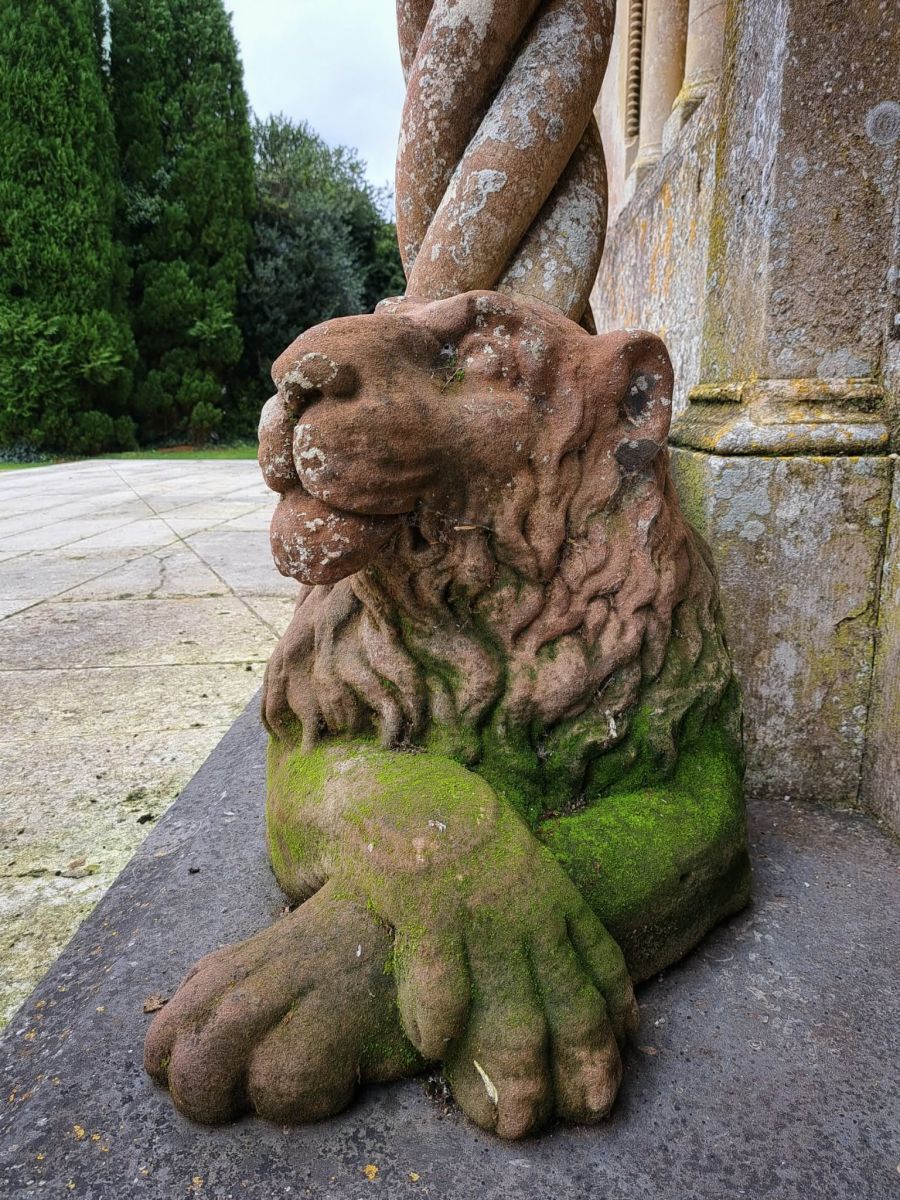
Within a short walk of the Market Square and Old St Mary’s Church Ruin, you will find the famous Italianate Church and a delightful river walk along the Wylye, running from St John’s Square through the Flouse Hole conservation area to Castle Meadow.
With Wilton House, Wilton Village and our independent shops and businesses, Wilton offers a unique and varied day out for families of all ages.
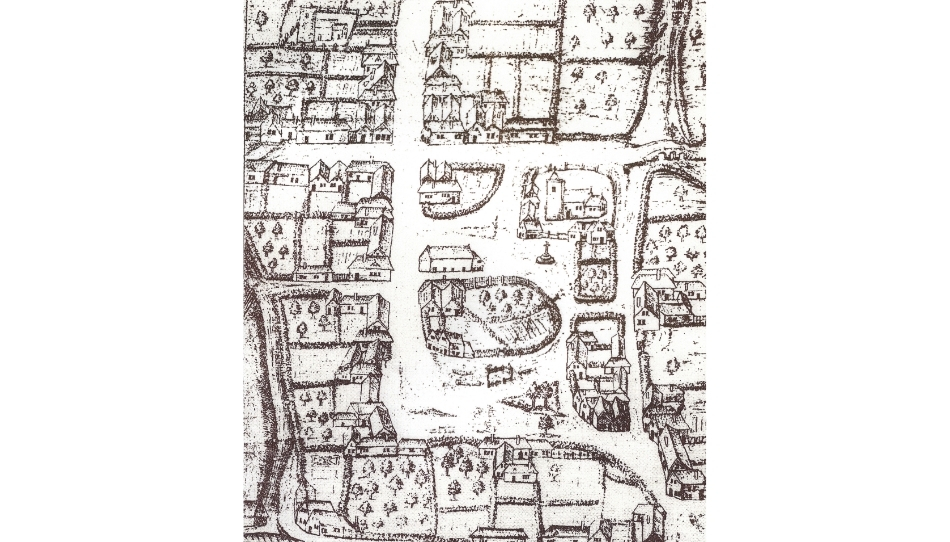
Wilton Town Centre from a drawing dated approx 1568AD
Famous Wiltonians
-
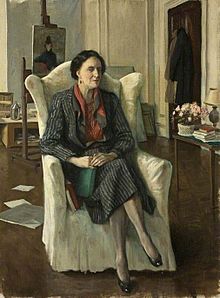
Edith Olivier MBE
Edith Maud Olivier MBE (31 December 1872 – 10 May 1948) was an English writer, also noted for acting as hostess to a circle of well-known writers, artists, and composers in her native Wilton. She was the first female Mayor of Wilton, from 1938-1941.
Opens in a new tab -
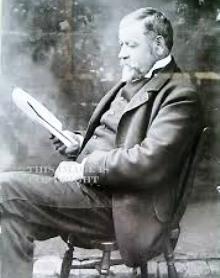
Edward Slow
Edward Slow (27 August 1841 – 16 February 1925) was a poet born in Wilton, Wiltshire, England. By profession a carriage builder, he wrote many poems and tracts based on his everyday observations of contemporary Victorian and Edwardian rural life. The poems, or 'rhymes' as he preferred to call them, were written in a style that was intended to phonetically emulate the rural Wiltshire accent.
Opens in a new tab -
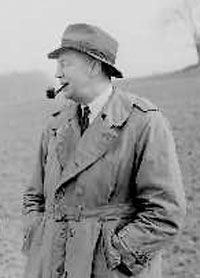
Arthur Street
Arthur George Street (7 April 1892 – 21 July 1966), who wrote under the name of A. G. Street, was an English farmer, writer and broadcaster. A number of his books were published by the literary publishing house of Faber and Faber. His best-known book was Farmer's Glory, describing his time in Canada and how he returned to Wiltshire.
Opens in a new tab -
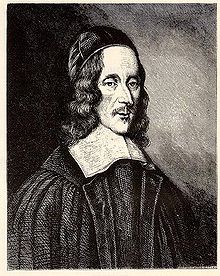
George Herbert
George Herbert (3 April 1593 – 1 March 1633) was an English poet, orator, and priest of the Church of England. His poetry is associated with the writings of the metaphysical poets, and he is recognised as "one of the foremost British devotional lyricists
Opens in a new tab
Wilton Town Charters
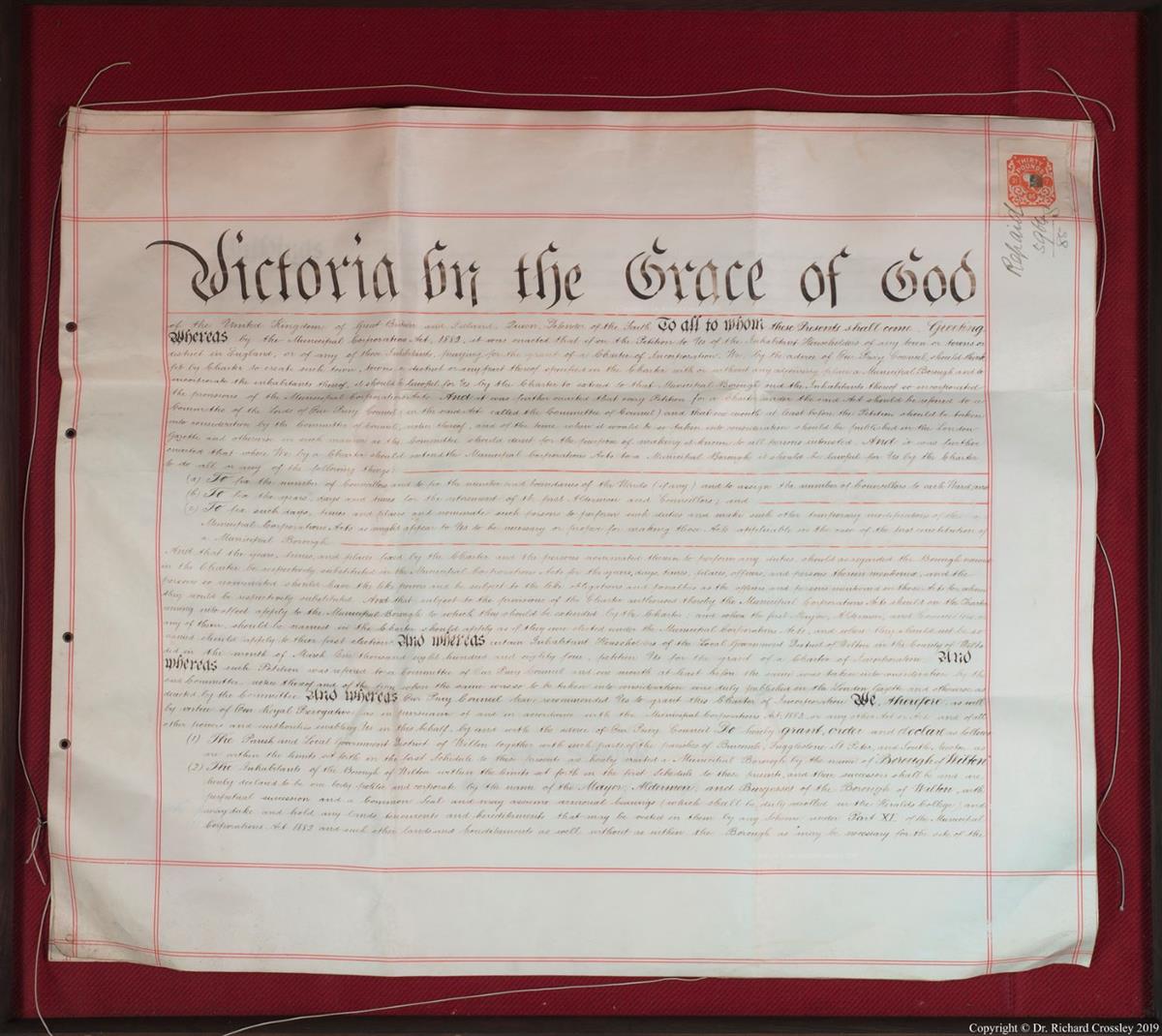
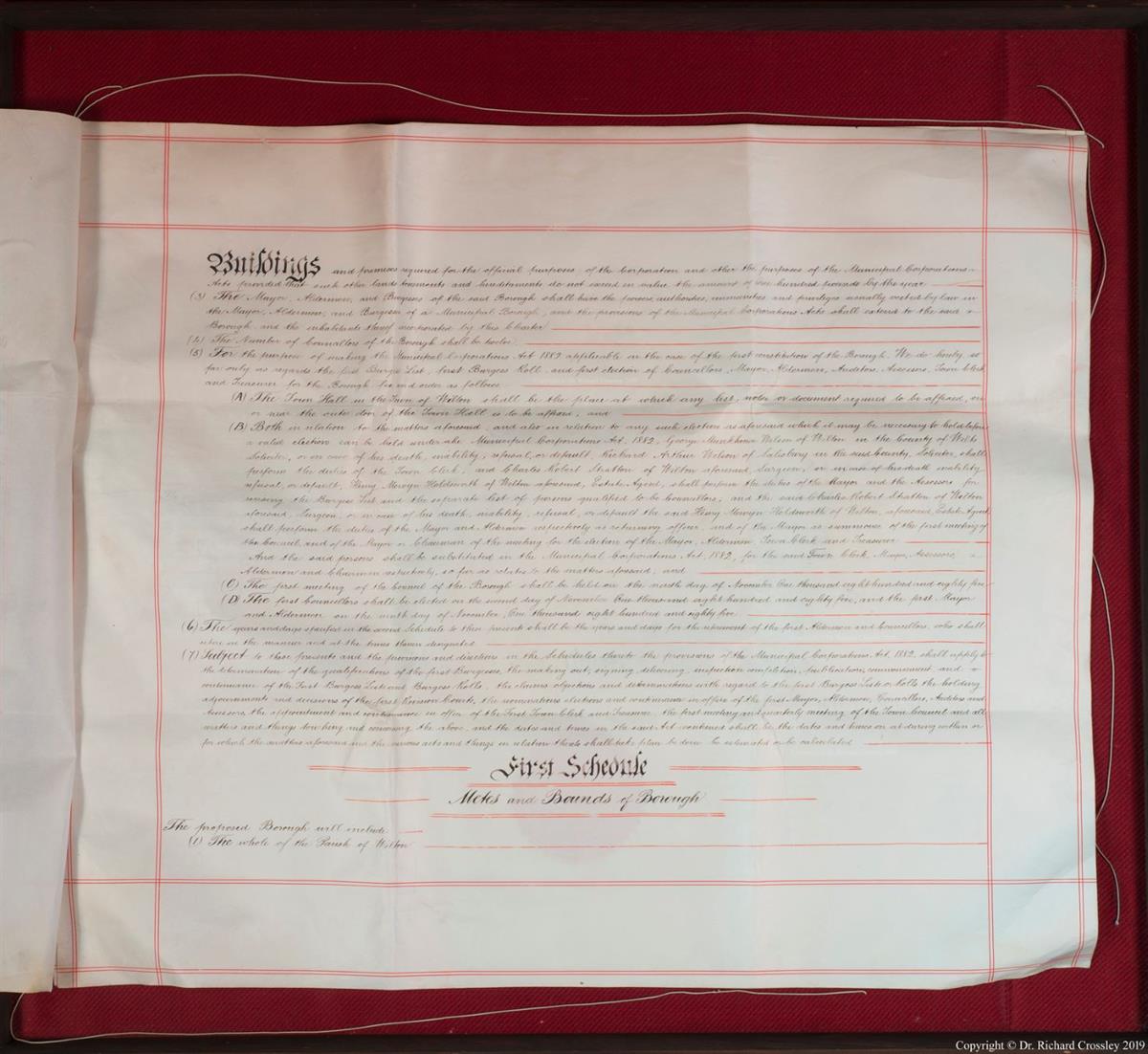
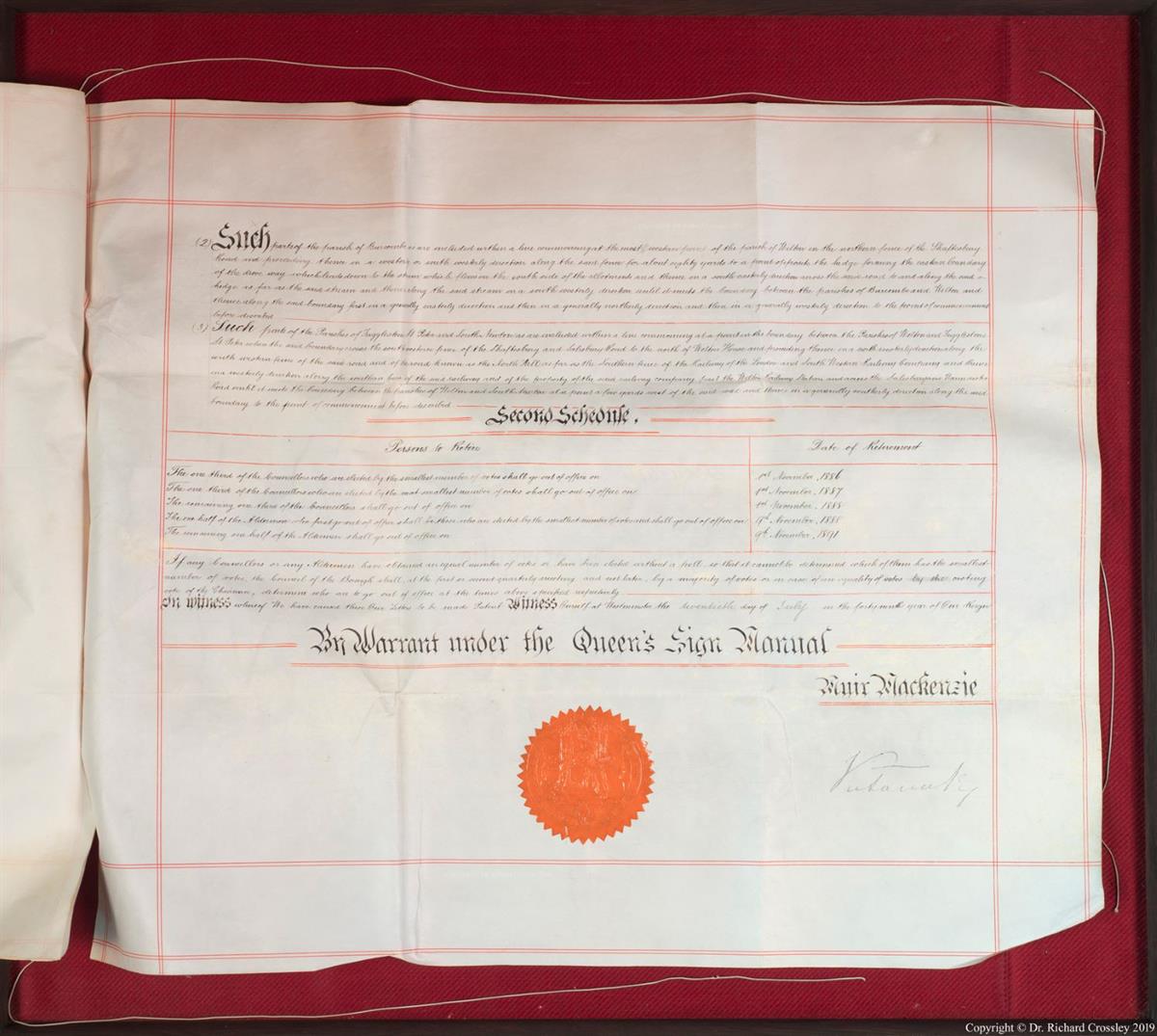
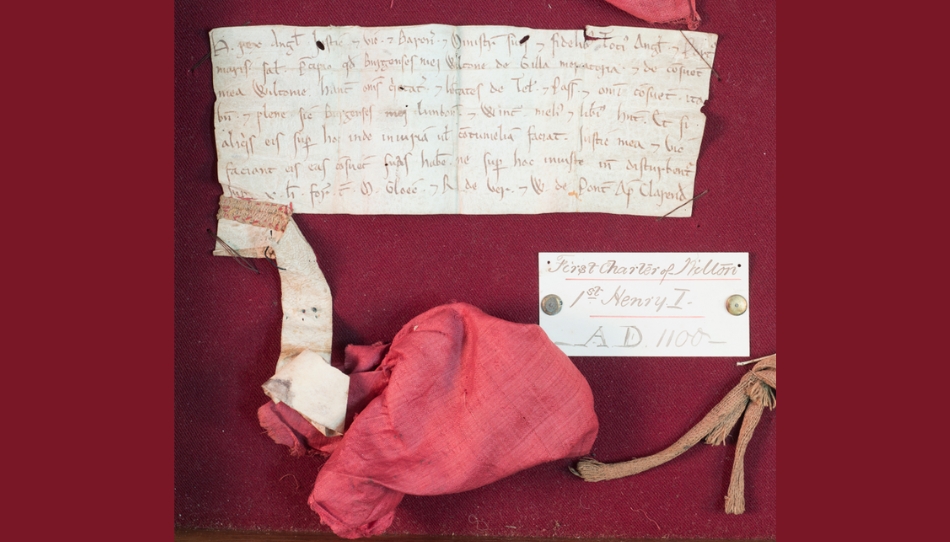
Wilton Town Council is fortunate enough to have several charters in it’s possession relating to the town, the earliest of which dates back to King Henry 1st in 1100AD. We have recently had these photographed and hope to be able to make them more accessible online soon.
Wilton can trace it’s Mayors back to 1256AD. You can view a full list of the Mayors of Wilton by clicking here
As each charter celebrates it’s anniversary in 2026, we’ll be publishing translations below.
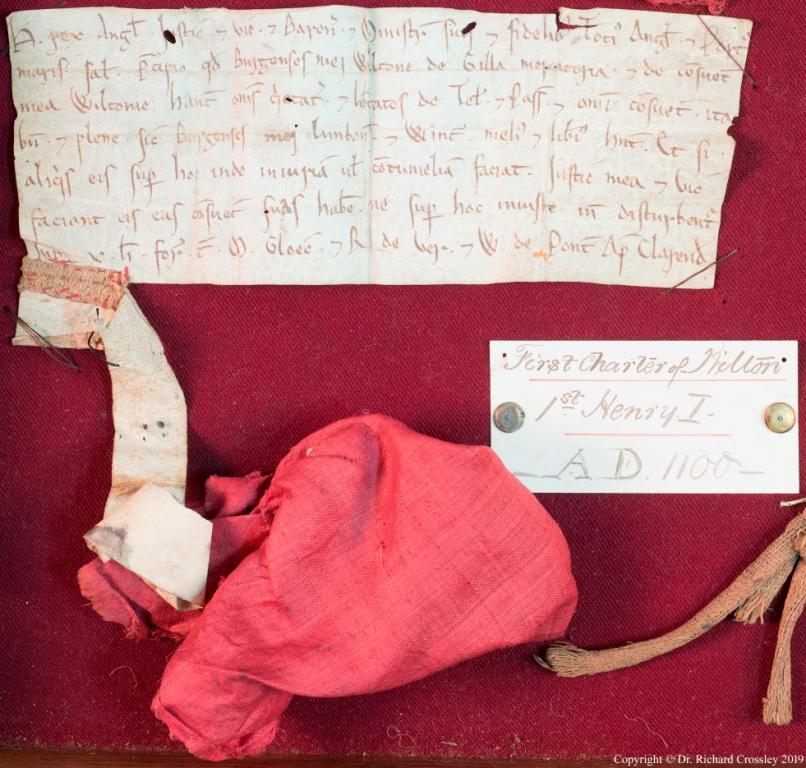
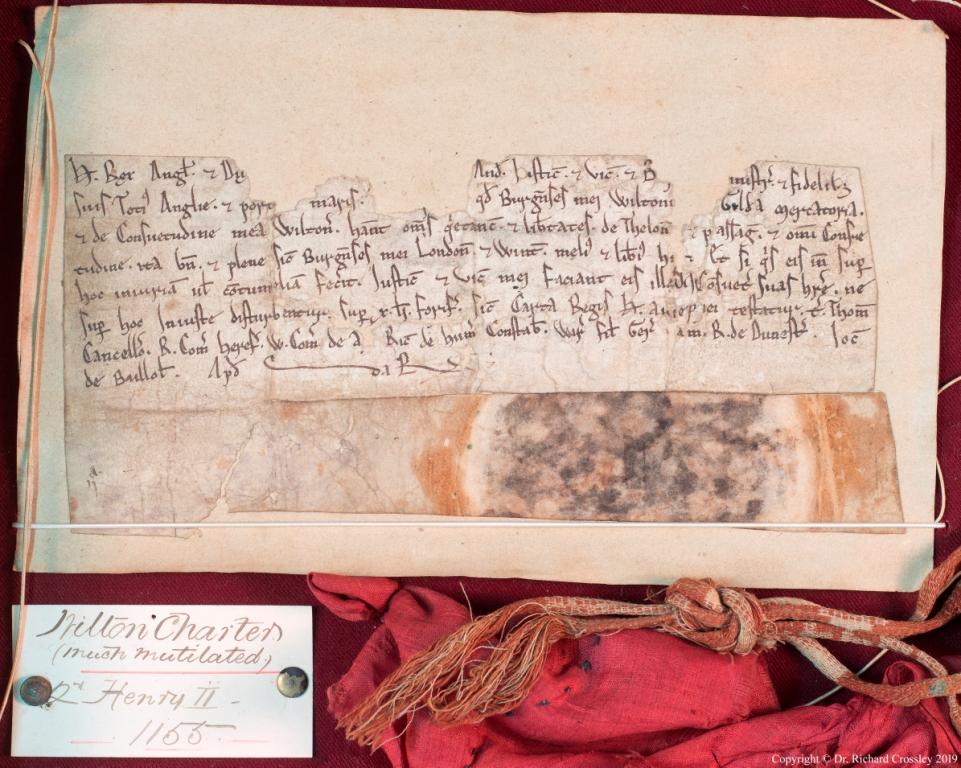
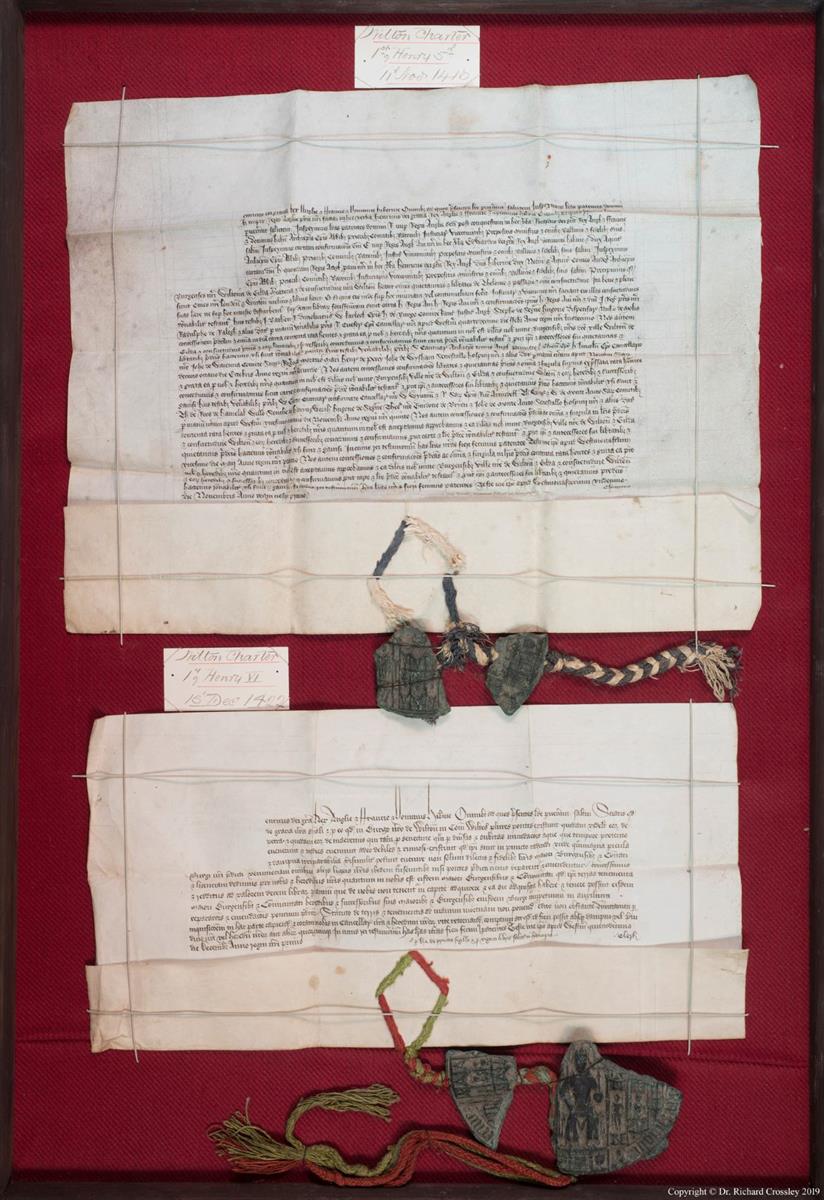

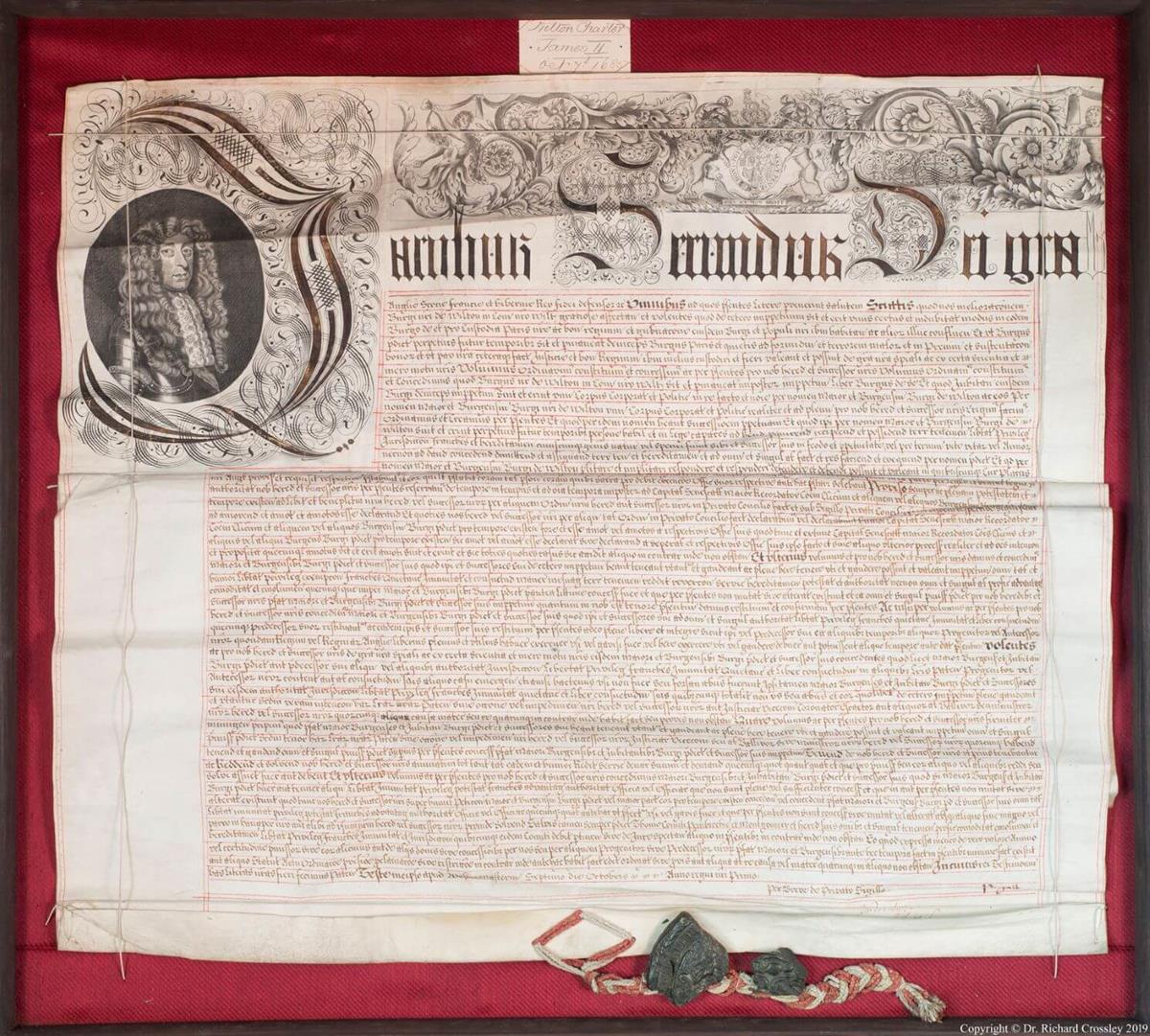
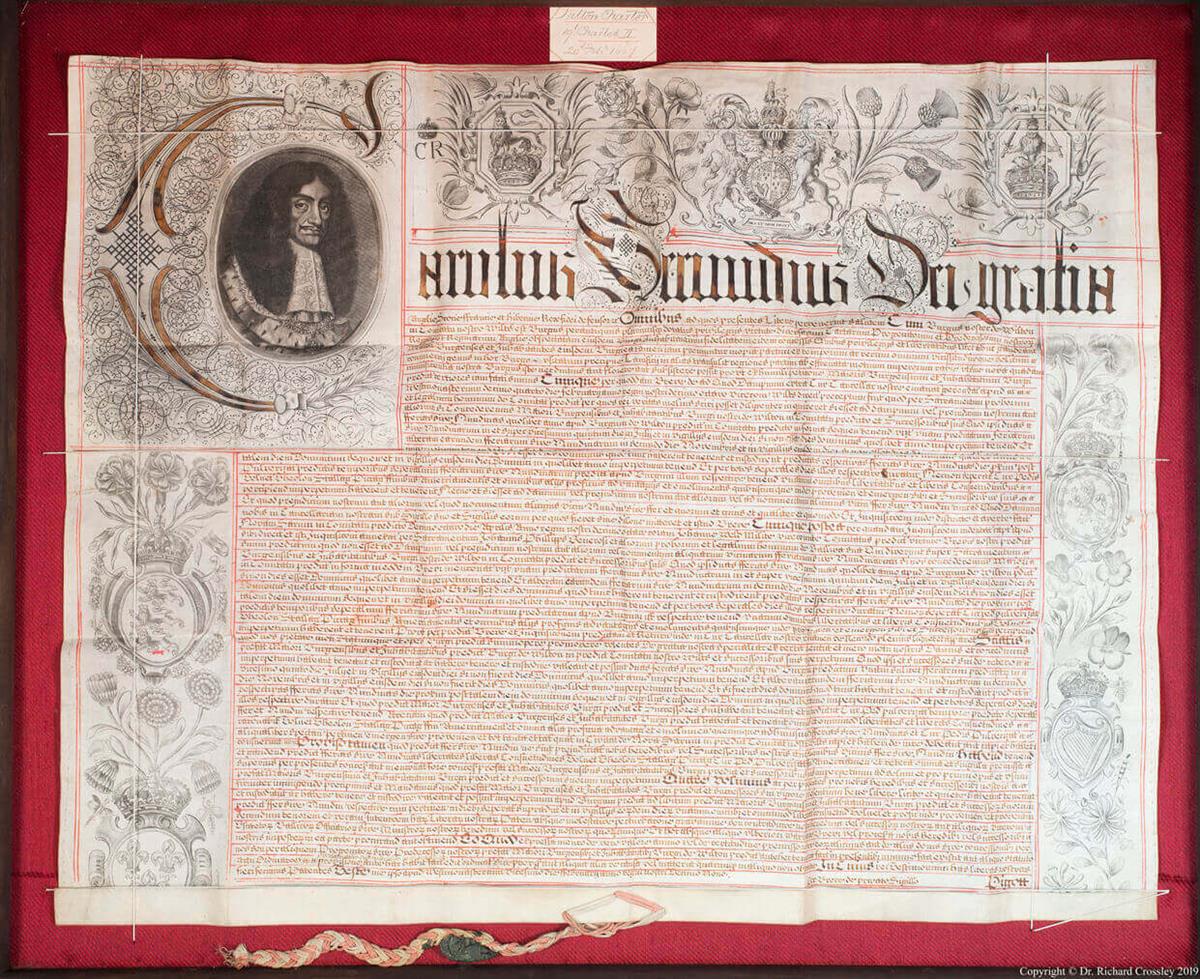
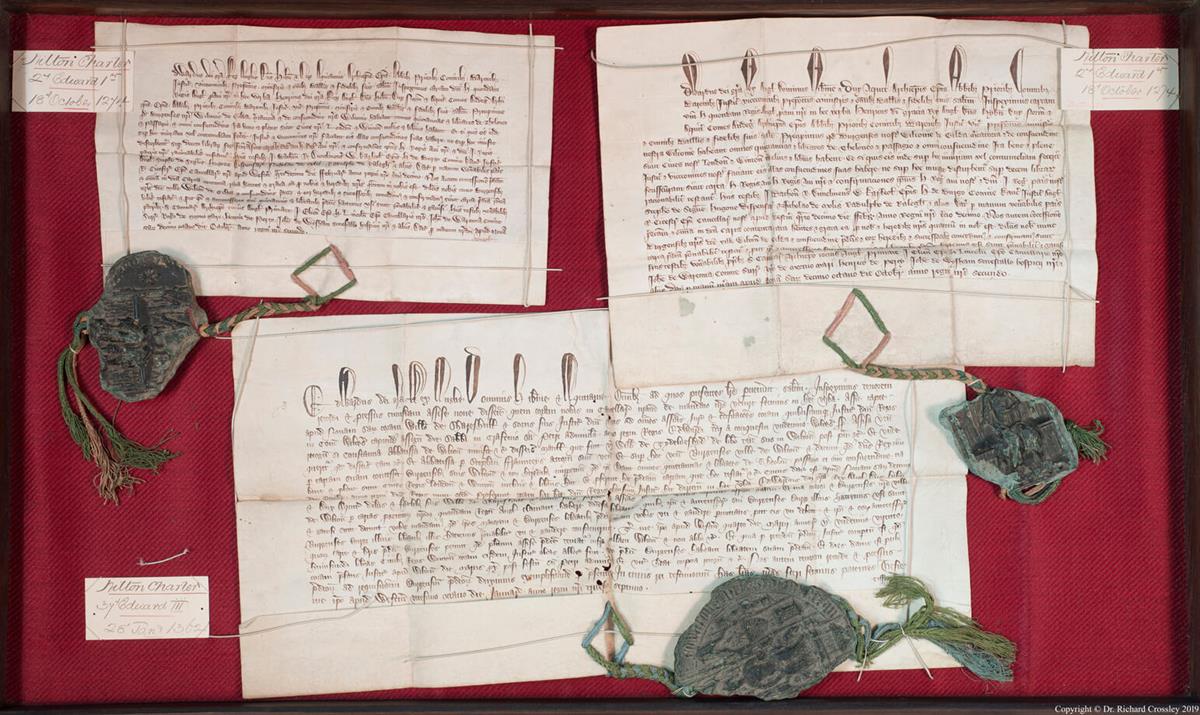
Henry I in 1100AD
Wilton’s first charter, written in heavily abbreviated medieval Latin reads:
“Henry, King of the English, to his Justices, Sheriffs, Barons, and to all his faithful subjects throughout the whole of England and the sea-ports, greeting.
I command that my burgesses of Wilton of the Merchant Guild, and of my customs of Wilton, shall have all quittances and liberties from toll, passage, and all custom, as well and fully as my burgesses of London and Winchester most well and freely have them.
And if anyone in this matter shall do them injury or insult, my Justices and Sheriffs shall see to it that they have their customs, so that they may not be unjustly disturbed concerning this.
Witnesses: [Earl/Lord of] Gloucester, Richard de Lucy, and William de Ponte-de-l’Arche.
At Clarendon.”
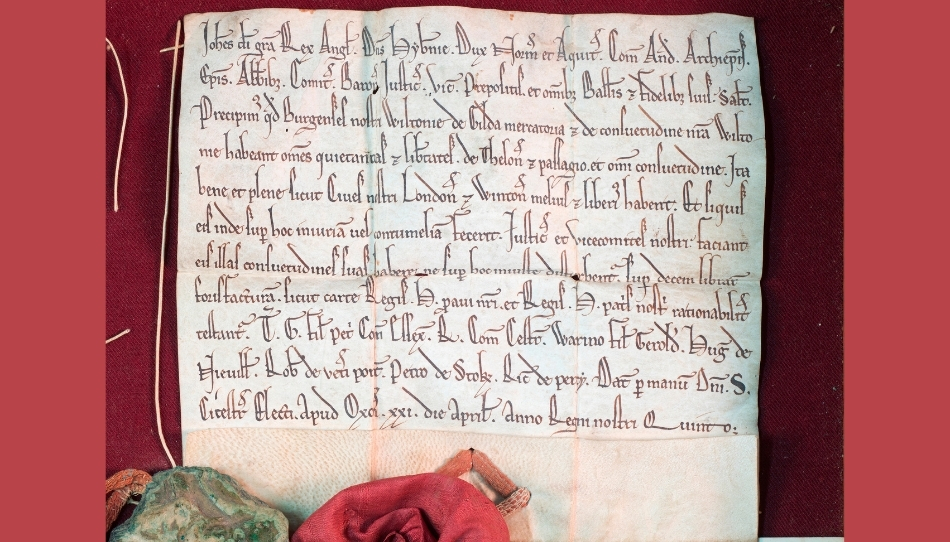
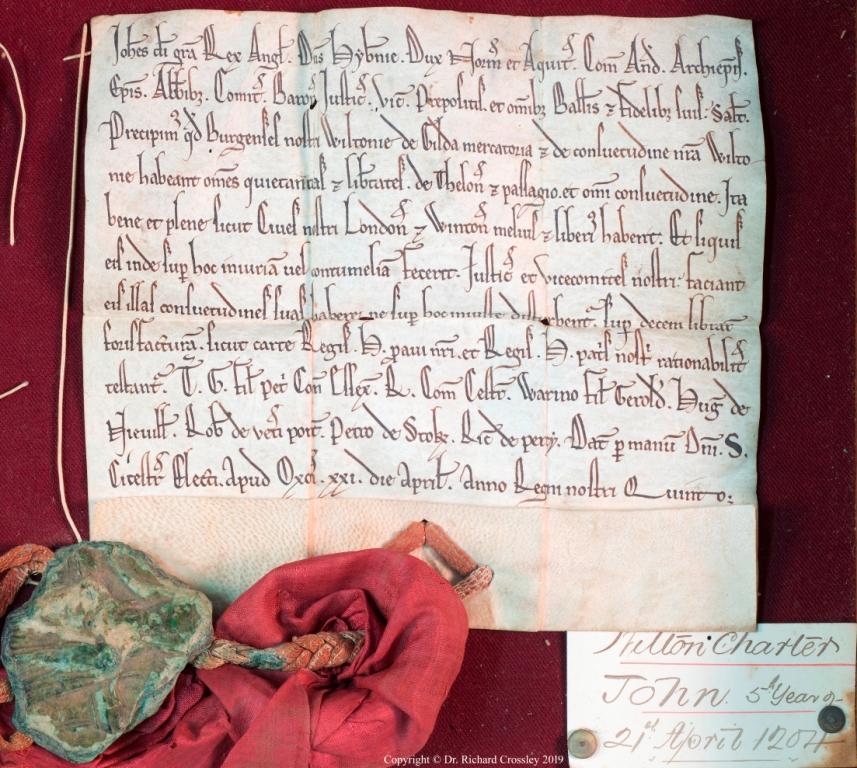
King John Charter: 1204AD
This Charter, written in medieval Latin, reads:
“John, by the grace of God King of England, Lord of Ireland, Duke of Normandy and Aquitaine, and Count of Anjou. To his Archbishops, Bishops, Abbots, Earls, Barons, Justices, Sheriffs, Reeves, and all his Bailiffs and faithful subjects, Greeting.
We command that our Burgesses of Wilton of the merchant guild, according to our custom, shall have all acquittances [exemptions] and liberties from toll, passage, and all customary dues. And they shall hold them as well and fully, as beautifully and freely, as our citizens of London and Winchester best and most freely hold theirs.
And if anyone should inflict injury or insult upon them because of this, our Justices and Sheriffs shall cause them to have their customs and rights, so that they are not troubled further, upon pain of a ten-pound forfeiture, just as the charters of King Henry [II], our father, and King Henry [I], our great-grandfather, reasonably testify.
Witnesses: * T. [Geoffrey fitzPeter], Earl of Essex
W. [William Longespée], Earl of Salisbury
Warin fitzGerold
Hugh de Neville
Robert de Veteri Ponte [Vipont]
Peter de Stoke
Simon de Pateshull
Given by the hand of Master S. [Simon], Bishop-elect of Chichester, at Oxford, on the 21st day of April, in the 5th year of our reign [1204].”
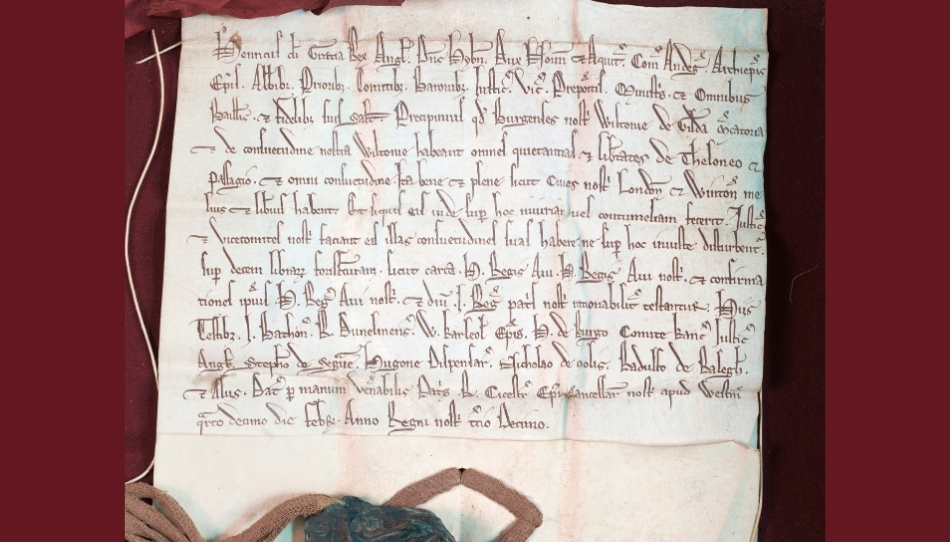
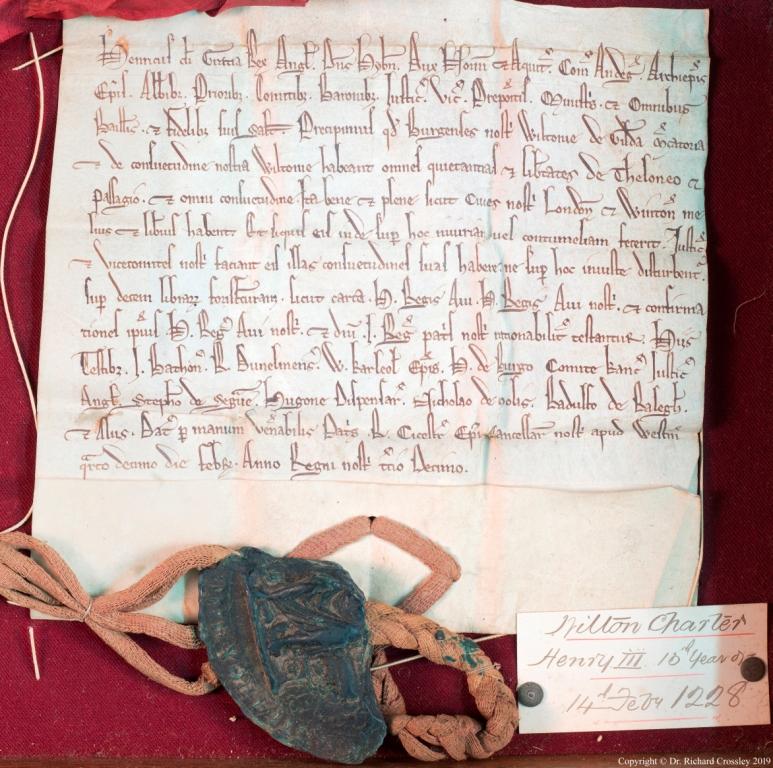
Henry III Charter: 1228AD
This Charter, written in medieval Latin, reads:
“Henry, by the grace of God King of England, Lord of Ireland, Duke of Normandy and Aquitaine, and Count of Anjou. To his Archbishops, Bishops, Abbots, Priors, Earls, Barons, Justices, Sheriffs, Reeves, Ministers, and all his Bailiffs and faithful subjects, Greeting.
We command that our Burgesses of Wilton of the merchant guild, according to our custom of Wilton, shall have all acquittances [exemptions] and liberties from toll, passage, and all customary dues. And they shall hold them as well and fully, as beautifully and freely, as our citizens of London and Winchester best and most freely hold theirs.
And if anyone should inflict injury or insult upon them because of this, our Justices and Sheriffs shall cause them to have their customs and rights, so that they are not troubled further, upon pain of a ten-pound forfeiture, just as the charters of King Henry [II], our grandfather, and King Henry [I], our great-great-grandfather, and the confirmations of the same King Henry [II] our grandfather, and of the Lord King John, our father, reasonably testify.
Witnesses:
J. [Jocelin of Wells], Bishop of Bath
R. [Richard Poor], Bishop of Salisbury
W. [Walter Mauclerk], Bishop of Carlisle
H. [Hubert] de Burgh, Earl of Kent, Justiciar of England
Stephen de Segrave
Hugh Despenser
Nicholas de Molis [Moels]
Radulf [Ralph] de Ralega [Raleigh]
… and others.
Given by the hand of the venerable father R. [Ralph Neville], Bishop of Chichester, our Chancellor, at Westminster, on the 14th day of February, in the 13th year of our reign [1228].”
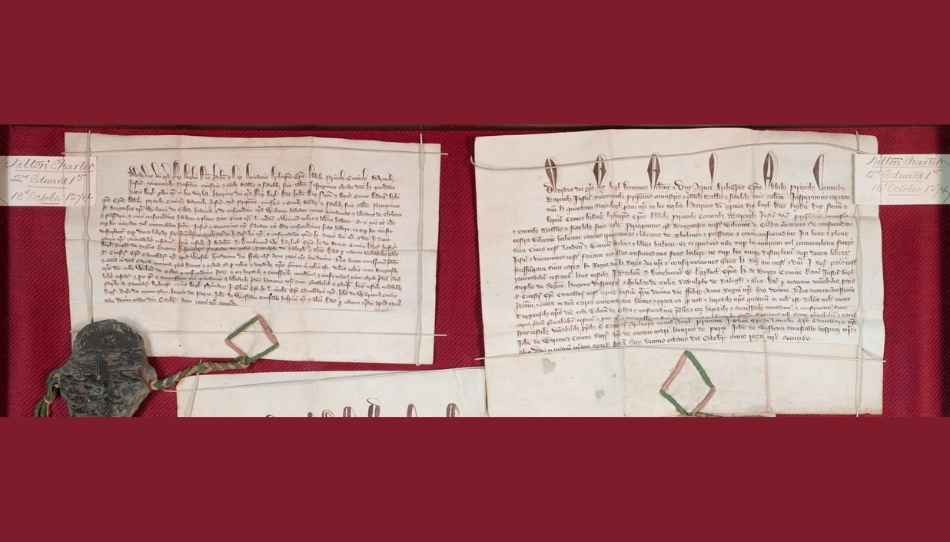
Edward I Charter: 1274AD
This Charter, written in medieval Latin, reads:
“Edward, by the grace of God King of England, Lord of Ireland, and Duke of Aquitaine, to his Archbishops, Bishops, Abbots, Priors, Earls, Barons, Justices, Sheriffs, Reeve-officers, Ministers, and all his bailiffs and faithful subjects, greeting.
We have inspected the charter which the Lord Henry, of famous memory, formerly King of England, our father, made to the burgesses of Wilton in these words:
“Henry, by the grace of God King of England, Lord of Ireland, Duke of Normandy and Aquitaine, and Count of Anjou, to the Archbishops, Bishops, Abbots, Priors, Earls, Barons, Justices, Sheriffs, Ministers, and all his bailiffs and faithful subjects, greeting.
Know ye that we have granted, and by this our present charter confirmed, to our burgesses of Wilton that they shall have all the liberties and quittances of toll, passage, and all customs, as fully, well, and quietly as the citizens of London or Winchester have them or ever held them best and most fully.
Wherefore we will and strictly command, for us and our heirs, that our aforesaid burgesses of Wilton and their heirs shall have forever all the liberties, customs, and quittances aforesaid, and that no one shall disturb them or their goods or chattels contrary to these liberties, upon pain of our forfeiture.
These being witnesses: [Witnesses to Henry III’s original charter]…”
And we, holding valid and acceptable the aforesaid concessions and confirmations, do, for ourselves and our heirs, grant and confirm the same to the aforesaid burgesses of Wilton and their successors, as the charter aforesaid reasonably testifieth.
Witnesses hereto:
The Venerable Fathers: Robert [Kilwardby], Archbishop of Canterbury and Primate of all England; Walter [de Merton], Bishop of Rochester; Richard [Gravesend], Bishop of Lincoln;
Gilbert de Clare, Earl of Gloucester and Hertford;
Henry de Lacy, Earl of Lincoln;
John de Warenne, Earl of Surrey;
Roger de Mortimer;
Antony Bek;
Hugh fitz Otto, Steward of our household;
Given by our hand at Westminster, on the eighteenth day of October, in the second year of our reign [18 October 1274].”
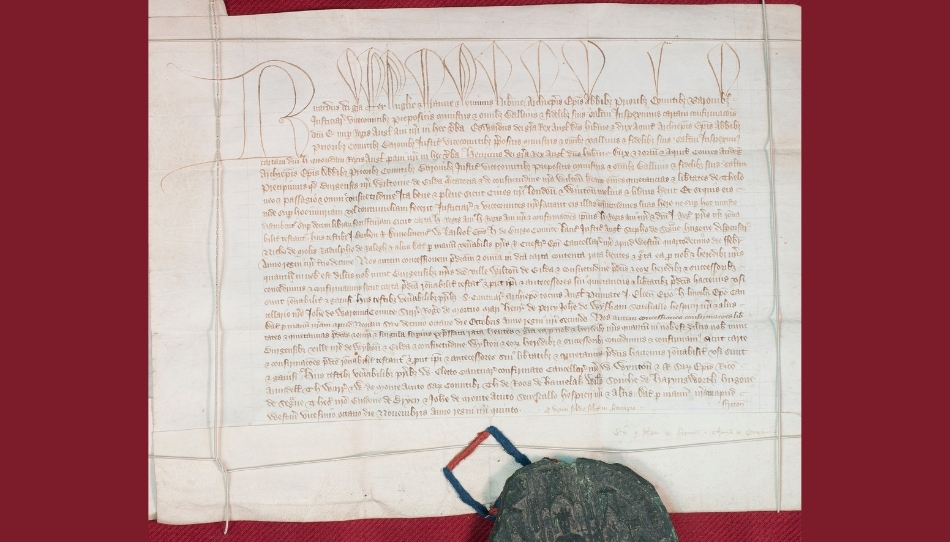
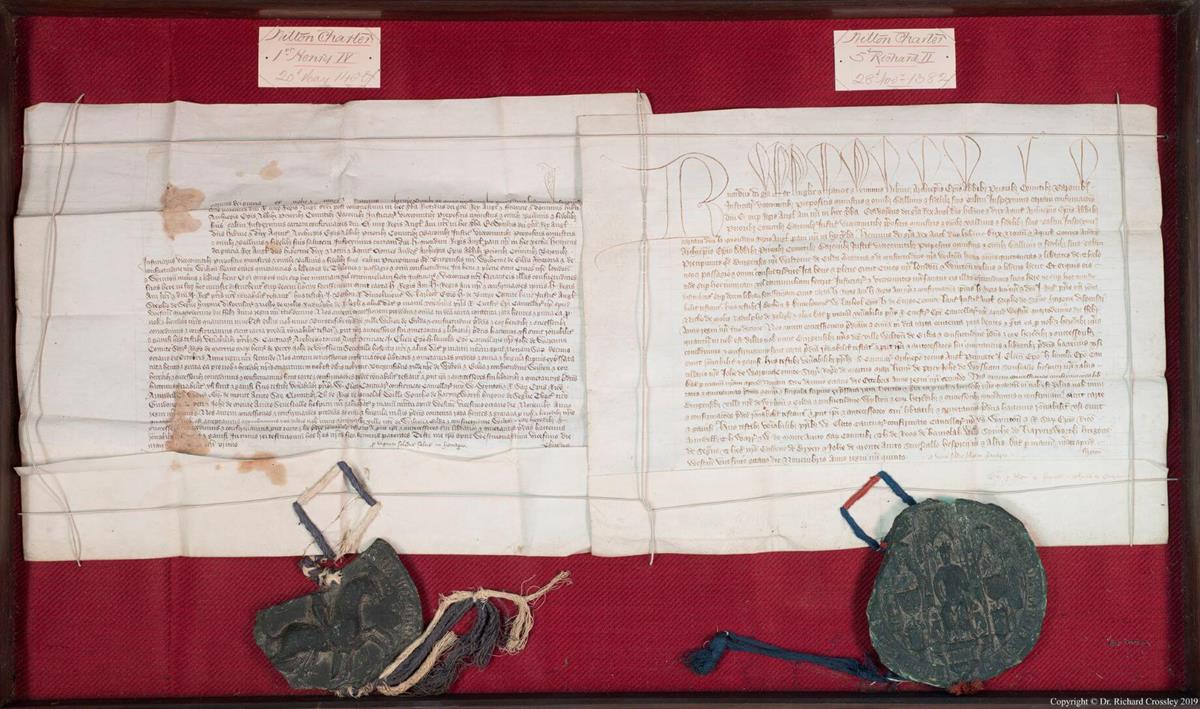
Richard II Charter: 1391AD
This Charter, written in medieval Latin, reads:
“Richard, by the grace of God King of England and France, and Lord of Ireland. To his Archbishops, Bishops, Abbots, Priors, Dukes, Earls, Barons, Justices, Sheriffs, Reeves, Ministers, and all his Bailiffs and faithful subjects, Greeting.
We have inspected a charter of confirmation of the Lord Edward [III], late King of England, our grandfather, made in these words:
“Edward, by the grace of God King of England… [Scribes here recite Edward III’s previous charter, which in turn inspected Henry III’s 1229 charter, which inspected John’s 1204 charter, all the way back to Henry I!]
…And if anyone should inflict injury or insult upon them because of this, our Justices and Sheriffs shall cause them to have their customs and rights… just as the charters of our ancestors reasonably testify.
Given by our hand at Westminster on the 28th day of October, in the 22nd year of our reign [1348].”
Now we [Richard II], holding the aforesaid gifts, grants, liberties, and acquittances to be valid and welcome, do, for ourselves and our heirs, as far as in us lies, grant and confirm them to our now beloved Burgesses of the said town of Wilton and their successors, just as the aforesaid charters reasonably testify, and as the same Burgesses and their predecessors have reasonably used and enjoyed those liberties and acquittances hitherto.
Witnesses:
William [Courtenay], Archbishop of Canterbury, Primate of All England
Robert [de Braybrooke], Bishop of London
John [de Waltham], Bishop of Salisbury, our Treasurer
John [of Gaunt], Duke of Lancaster, our most dear uncle
Edmund [of Langley], Duke of York, our most dear uncle
Thomas [of Woodstock], Duke of Gloucester, our most dear uncle
Richard [Fitzalan], Earl of Arundel
Thomas [de Beauchamp], Earl of Warwick
Henry [Percy], Earl of Northumberland
John [de Montagu], Steward of our Household
… and others.
Given by our hand at Westminster on the 28th day of November, in the 15th year of our reign [1391].”
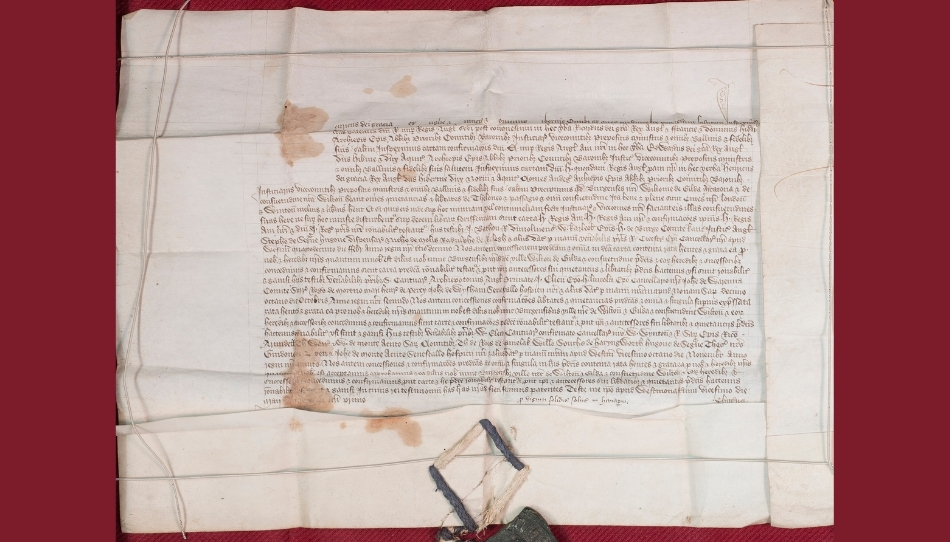
Henry IV Charter (Letters Patent): 1400AD
This Charter, written in medieval Latin, reads:
“Henry, by the grace of God King of England and France and Lord of Ireland, to all Archbishops, Bishops, Abbots, Priors, Dukes, Earls, Barons, Justices, Sheriffs, Ministers, and all his faithful bailiffs and subjects, greeting.
We have inspected a charter of confirmation of the Lord Henry [Henry III], formerly King of England, our progenitor, made in these words:
“Henry, by the grace of God King of England, Lord of Ireland, Duke of Normandy and Aquitaine, and Count of Anjou, to his Archbishops, Bishops, Abbots… greeting. We have inspected a charter which the Lord Henry [Henry II], the King our grandfather, made to the Burgesses of Wilton of the Guild Merchant, in these words:
‘Henry, King of England, Duke of Normandy and Aquitaine, and Count of Anjou… Know ye that I have granted to my Burgesses of Wilton of the Guild Merchant all their freedoms and free customs throughout my whole land, namely toll, passage, and all customs, as well and fully as they ever had them in the time of King Henry our grandfather [Henry I]… And I forbid that anyone unjustly disturb them or their goods upon pain of a ten-pound forfeiture.’
We have also inspected a charter of confirmation of the Lord John, formerly King of England, our father, confirming the same liberties…”
[The text continues to list further inspections of charters granted by King Edward I and King Edward III, confirming Wilton’s ancient market rights and legal exemptions from tolls across the realm].
Now we, ratifying and approving the aforesaid concessions, freedoms, and customs, and all things contained in the said charters, do for ourselves and our heirs, as much as in us lies, accept, approve, and by the tenor of these presents, grant and confirm them to our beloved now Burgesses of the town of Wilton and their successors, as the said charters reasonably testify, and as they and their ancestors have reasonably used and enjoyed those liberties and customs.
In witness whereof we have caused these our letters to be made patent.
Witness myself at Westminster, on the twentieth day of May, in the first year of our reign [1400].”
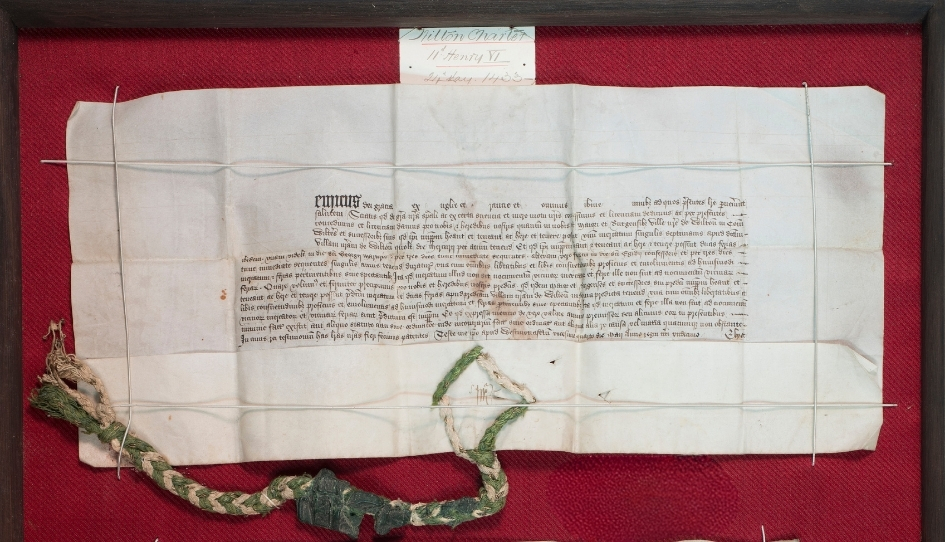
Henry VI Charter: 1433AD
This Charter, written in medieval Latin, reads:
“Henry, by the grace of God, King of England and France and Lord of Ireland, to all to whom these present letters shall come, greeting.
Know that we, of our special grace and from our certain knowledge and mere motion, have granted and given licence, and by these presents do grant and give licence for us and our heirs, as much as in us lies, to our beloved the Mayor and Burgesses of our town of Wilton in the County of Wiltshire and their successors, that they and their successors may forever have and hold, and may be able to have and hold, one market every week on Wednesday at our said town of Wilton, to be held through the whole day.
And that they may have and hold there two fairs each year, to be held annually: namely, one on the day of St. George the Martyr and for the three days then immediately following, and another on the day of St. Giles the Confessor and for the three days then immediately following, together with all liberties and free customs, profits, and emoluments to such market and fairs pertaining or belonging;
Provided that the said market and fairs be not to the injury of neighbouring markets and fairs.
Wherefore we will and firmly command for us and our heirs, that the aforesaid Mayor and Burgesses and their successors may forever have and hold the aforesaid market and fairs at our predicted town of Wilton in the manner aforesaid, together with all liberties, free customs, profits, and emoluments to such market and fairs pertaining or belonging, so that the market and those fairs be not to the injury of neighbouring markets and fairs, as is aforesaid.
And this without any express mention of the true yearly value of the premises or of any other gifts or grants made to them by us or any of our progenitors in these presents, or any statute, act, or ordinance made or provided to the contrary, or any other thing, cause, or matter whatsoever in any wise notwithstanding.
In witness whereof we have caused these our letters to be made patent.
Witness myself at Westminster on the twenty-fourth day of May in the eleventh year of our reign [1433].”
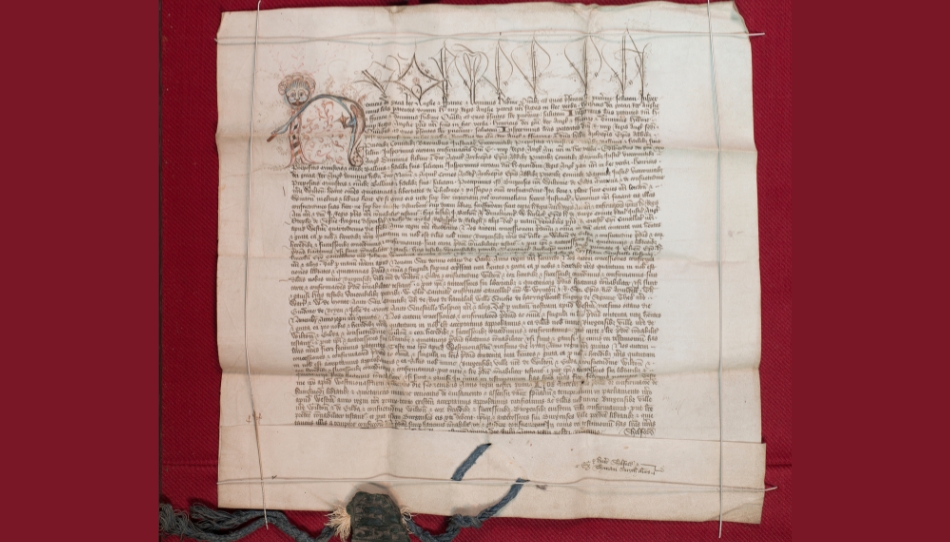
Second Henry VI Charter: 1433AD
This Charter, written in medieval Latin, reads:
“Henry, by the grace of God, King of England and France, and Lord of Ireland, to all to whom these present letters shall come, greeting.
We have inspected the letters patent of the Lord Henry, late King of England, our father, made in these words: Henry, by the grace of God, King of England and France, and Lord of Ireland, to all to whom these present letters shall come, greeting.
We have inspected the letters patent of the Lord Henry, late King of England, our grandfather, made in these words, inspecting the letters patent of the Lord Richard, late King of England, the second after the Conquest, made in these words, inspecting the charter of the Lord Edward, late King of England, our ancestor, made in these words: We have inspected the charter of the Lord Henry, formerly King of England, our ancestor, made in these words: Henry, King of England, Duke of Normandy and Aquitaine, and Count of Anjou, to his Archbishops, Bishops, Abbots, Earls, Barons, Justiciars, Sheriffs, Ministers, and all his faithful subjects of the whole of England, greeting.
Know ye that I have granted and by this my charter confirmed to my Burgesses of Wilton of the Guild Merchant all their quittances and liberties and free customs throughout my whole land, in toll, passage, bridge-toll, and all other customs, as well and fully as the citizens of London or Winchester best and most freely have theirs. And if anyone upon this causes them injury, insult, or vexation, full justice shall be done to them without delay by my Sheriffs or Justiciars. And I strictly forbid that anyone should unjustly disturb, molest, or vex them over these things, upon pain of a forfeiture of ten pounds to me. These being witnesses: Thomas, Chancellor; Saint Thomas of Canterbury; Richard de Lucy; Reginald de St Valery; and others. Given by our hand at Salisbury.
We, however, holding the aforesaid gifts, grants, and liberties to be valid and acceptable, do grant and confirm them to the now Burgesses of the said town of Wilton and their heirs and successors, as the aforesaid charters and confirmations reasonably witness, and as the same Burgesses and their ancestors have hitherto reasonably used and enjoyed the liberties and quittances aforesaid. These being witnesses: the venerable fathers Thomas, Archbishop of Canterbury, Primate of all England; Robert, Bishop of London; Henry, Bishop of Lincoln; and others. Given by our hand at Westminster, the twenty-eighth day of October, in the first year of our reign. We, however, holding the aforesaid grants and confirmations to be valid and acceptable, do approve, ratify, and confirm them to the now Burgesses of the town of Wilton, and their heirs and successors, as the letters and charters aforesaid reasonably witness. In witness whereof, we have caused these our letters to be made patent.
Witness myself at Westminster, the twentieth day of November, in the first year of our reign. We, however, with the advice and assent of the Lords Spiritual and Temporal being in our Parliament held at Westminster in our first year, do accept, approve, ratify, and confirm the aforesaid liberties and quittances to the now Burgesses of the town of Wilton, and their heirs and successors, as the letters aforesaid reasonably witness, and as the same Burgesses ought to use them, and as they and their predecessors have always hitherto reasonably used and enjoyed those liberties and quittances from the time of the making of the charters and letters aforesaid.
In witness whereof, we have caused these our letters to be made patent. Witness myself at Westminster, the twenty-fourth day of May and the first day of July, in the eleventh year of our reign [1433]”.
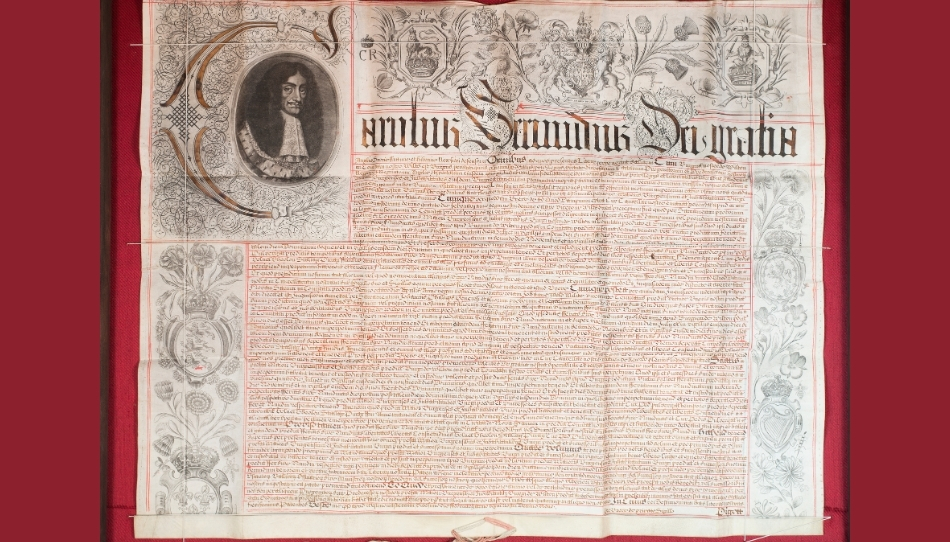
Charles II Charter (Letters Patent): 1667AD
This Charter, written in Latin, reads:
“Charles the Second, by the grace of God King of England, Scotland, France, and Ireland, Defender of the Faith, etc. To all to whom these present letters shall come, Greeting.
Whereas our Borough of Wilton in our County of Wiltshire is an ancient borough, and the Burgesses and inhabitants thereof have from time immemorial enjoyed various liberties, franchises, immunities, and privileges by virtue of charters granted by our ancestors, former Kings and Queens of England…
And whereas the Burgesses and inhabitants of the said Borough have humbly besought us that we, for the better rule, governance, and improvement of the same Borough, would graciously vouchsafe to grant and confirm their ancient liberties…
Know ye therefore that we, favorably inclining to their requests, do grant, ratify, and confirm to the Mayor, Burgesses, and inhabitants of Wilton all and singular the freedoms, merchant guilds, exemptions from tolls, passages, customs, and jurisdictions which they have lawfully held or ought to have enjoyed by reason of any previous charters…
[Concerning the Corporation]
…And that they, the Mayor and Burgesses of the Borough aforesaid, and their successors, shall be for all future times persons fit, capable, and in law secret to have, perceive, receive, and possess lands, tenements, liberties, privileges, jurisdictions, franchises, and hereditaments of whatsoever kind, nature, or species they may be, to them and their successors in fee and perpetuity… And that by the same name of the Mayor and Burgesses of the Borough of Wilton, they may plead and be impleaded, answer and be answered, defend and be defended in all courts and places whatsoever, and before any judges, justices, or other officers of us, our heirs, and successors…
[Concerning the Election of the Mayor and Oaths]
…And further, we will and by these presents do grant to the aforesaid Mayor and Burgesses that they, from time to time, shall and may have the power and authority yearly and every year, on the Monday next after the Feast of Saint Michael the Archangel, to nominate and elect, and they may elect, one honest and discreet man from the Aldermen of the Borough aforesaid to be the Mayor of the Borough aforesaid for one whole year next ensuing… And that he, before he is admitted to execute that office, shall take his corporal oath upon the Holy Gospels of God to well and faithfully execute the said office, and also shall take the Oaths of Allegiance and Supremacy before the last Mayor, his predecessor, or in his absence, before the Aldermen then present…
[Concerning Vacancies and Governance]
…And whenever it shall happen that any Mayor, Alderman, or Chief Burgess of the Borough aforesaid for the time being shall die, or be removed from his office, or depart therefrom, that then and so often it shall well be lawful for the surviving or remaining Mayor, Aldermen, and Burgesses to assemble themselves within the Guildhall of the Borough… and there to nominate, elect, and swear another fit person or persons into the place or places of the person so dead or removed…
[Concerning the High Steward, Recorder, and Courts]
…And we assign, nominate, and constitute our well-beloved and faithful cousin [Name/Title, typically the Earl of Pembroke] to be the first and modern Chief Steward of the Borough aforesaid… And we grant that they may have a discreet man, learned in the laws of England, to be the Recorder of the Borough… And that the Mayor and Recorder for the time being may hold within the said Borough a Court of Record on every bi-weekly Monday before the Mayor, Recorder, and Aldermen, to hear and determine all actions, plaints, and suits concerning debts, accounts, covenants, and trespasses arising within the liberties of the said Borough…
Witnesses: Ourself at Westminster on the twenty-second day of November, in the twenty-sixth year of our reign.
By writ of the Privy Seal.
[Signed:] Pigott”
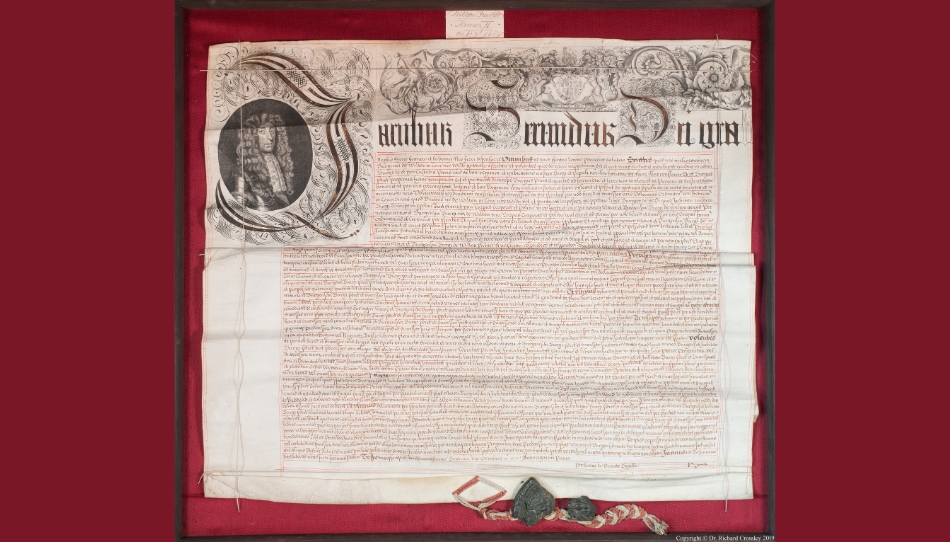
James II Charter: 1685 AD
This charter, written in Latin, reads:
“James the Second, by the Grace of God, of England, Scotland, France, and Ireland, King, Defender of the Faith, etc., to all to whom these present letters shall come, greeting.
Know ye that We, having regard to the improvement of our Borough of Wilton in our County of Wiltshire, and desiring that from henceforth there shall continually be one certain and undoubted method within the same borough for the keeping of Our peace and the good rule and governance of the said borough and of the people dwelling therein and resorting thither; and that the borough may be and remain perpetually in future times a borough of peace and quiet, to the dread and terror of the wicked and for the reward and support of the good; and that our peace and other deeds of justice may be maintained and executed there without further delay;
We, of our special grace, certain knowledge, and mere motion, have willed, ordained, constituted, and granted, and by these presents for Us, our heirs, and successors do will, ordain, constitute, declare, and grant:
That the said Borough of Wilton in our County of Wiltshire shall be and remain henceforth forever a free borough of itself;
And that the inhabitants of the said borough shall and may be one body corporate and politic in deed, fact, and name, by the name of the Mayor and Burgesses of the Borough of Wilton;
And them, by the name of the Mayor and Burgesses of the Borough of Wilton, We do really and fully, for Us, our heirs, and successors, erect, make, ordain, and create into one body corporate and politic.
And We grant that by the same name they shall have perpetual succession; that they shall be persons capable and able in law to acquire, receive, hold, and possess lands, tenements, liberties, privileges, jurisdictions, franchises, and hereditaments of whatsoever kind, nature, or species, to them and their successors in fee and perpetuity, or for a term of life, years, or otherwise; as well as goods, chattels, and other things of any kind; and also to give, grant, demise, assign, and dispose of the same.
Furthermore, by the same name of the Mayor and Burgesses of the Borough of Wilton, they shall and may plead and be impleaded, answer and be answered, defend and be defended in all courts, places, and before any judges, justices, and officers whatsoever.
Provided always, and We reserve full power and authority to Us, our heirs, and successors, by these presents, from time to time and at all times hereafter, at the will and pleasure of Us, our heirs, or successors, by any Order made in Our Privy Council and under the seal of the Privy Council signified to them, to remove and declare removed any Mayor, Recorder, Town Clerk, Alderman, or any Capital Burgess of the borough aforesaid. And upon such declaration, the person so indicated shall be immediately removed from office without any further process, and another fit person shall be elected and sworn into their place according to the ancient custom.
And further, of our more abundant grace, We grant and confirm to the said Mayor and Burgesses and their successors all and singular such liberties, franchises, immunities, exemptions, jurisdictions, lands, tenements, and customs which the Mayor and Burgesses or the inhabitants of the borough have lawfully had, held, used, or enjoyed in the past by reason of any charters, letters patent, or ancient lawful prescriptions. To have, hold, and enjoy all the aforesaid premises to the Mayor and Burgesses and their successors forever, yielding and paying to Us, our heirs, and successors the customary rents and services due thereof.
In witness whereof, We have caused these our letters to be made patent. Witness myself at Westminster, the seventh day of October in the first year of our reign [1685].”