Wilton Heritage Trail

Maps are available from:

  • The Town Council Offices, Kingsbury Square
  • Lucky Leads, North Street
  • HappyBara, South Street

Quick links

  • Wilton Carpet Factory & Wilton Village

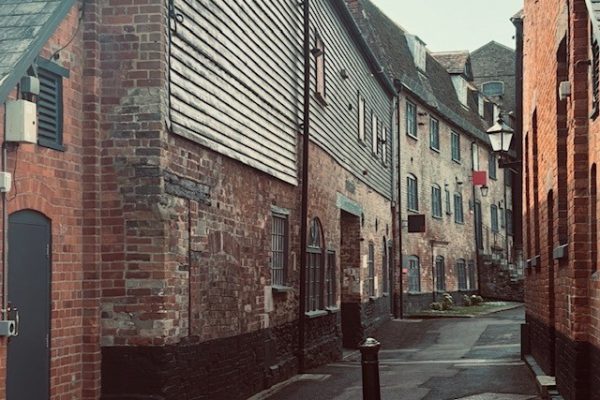
    Weaving at Wilton was originally a cottage industry in a wool-producing area of the country. In 1699, William III granted a charter to The Clothiers and Weavers of Wilton, decreeing that only those who had served a seven year apprenticeship could trade within four miles of the town. In 1741, Henry, 9th Earl of Pembroke, brought two French carpet weavers to Wilton, smuggling them in wine barrels, to teach local weavers their craft. When, in 1835, the Axminster Carpet Factory closed, following fire and bankruptcy, Blackmores of Wilton bought the remaining stock and looms, expanding their business to include hand knotted carpets, still called Axminsters. Wilton Carpets continue to design, manufacture and retail their renowned luxury rugs on the site. Following a management buyout of the carpet factory in 1995, the buildings from which it had previously operated on King Street were sold to a company who developed it into Wilton Shopping Village. There are two linked areas, New Square with the old stoke house which was used to pump heat into the factory buildings, and the weaving shops where the famous Wilton Carpets were produced. Across the River Wylye, lies the Historic Courtyard, incorporating 18th century buildings, the dye house and the factory managers house. In 2024, the shopping village was brought back under the management of Wilton Carpets, and rebranded as Wilton Village.
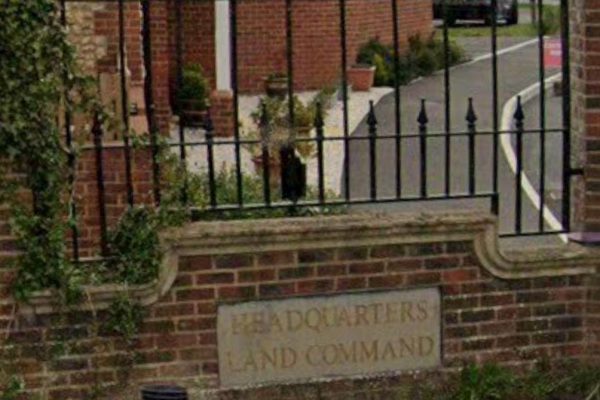
  • Former Headquarters of UK Land Forces

    The Army first came to Wilton in 1914, when a camp was established near the Sheep Fair field to house the troops undergoing training on Salisbury Plain. The association ended in 1918, but was re-established during the Second World War when Wilton House became the Headquarters of Southern Command, where the D-Day landings were discussed and planned. Southern Command remained at Wilton House until 1949, when it moved to a site north of the A36, and expanded into Erskine Barracks in the early 1960s. Southern Command underwent numerous name changes over the years; HQ UK Land Forces, Land Command and then simply Land Forces in 1995. The site was sold to developers in 2013 when the Ministry of Defence transferred operations to Andover. The new housing development on the site retains its military connections. The main entrance gates remain in-situ, the road names are sourced from the War Memorial on West Street in Wilton, and EntrainSpace, a veterans centre has been built on the site, helping and supporting ex-military personnel to adjust to civilian life once they have left the armed services.

  • St Peters, Fugglestone

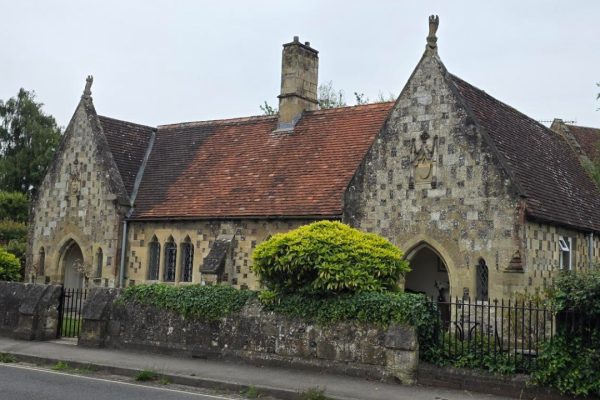
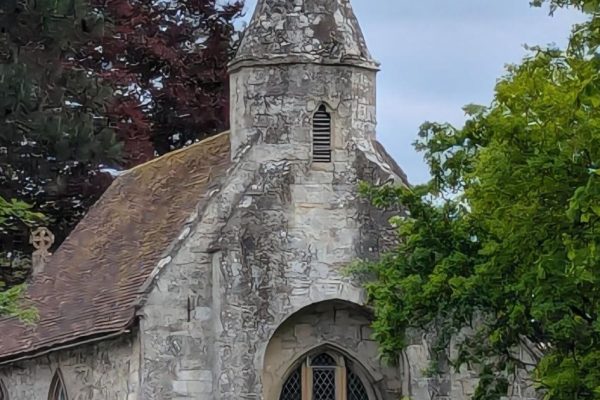
    The church is almost all that remains of the ancient Parish of Fugglestone St Peter, which was broken up in 1894, and partly absorbed into Wilton. Fugglestone, according to Leland, was the burial place of King Ethelbert of Wessex, the first Saxon king to convert to Christianity and older brother of Alfred the Great. It was also home to Dr Simon Forman (1552-1611), astrologer, medic and alchemist (Wilton's very own wizard) who was educated, and later taught, in Wilton. His diary is an important scholarly source for illuminating Shakespeare's productions in London. First mentioned in 1291, St Peters is noted for its tall box pews and gas lighting. The metaphysical poet and hymnist, George Herbert (1593-1633), a kinsman of the Earl of Pembroke, was rector at the church from 1629-1633. The church is currently in the process of being transformed into a community hub. A nearby housing development at the top of The Avenue is named St Peter's Place after the ancient parish. To the east of the church is the site - now within the park of Wilton House - of the original Hospital of St Giles and St Anthony, founded for lepers in around 1135AD by Henry I's widow, Adela of Louvain, whose ghost is still said to roam the road. The hospital was re-erected in King Street, directly across the roundabout, in Tudor-Gothic style in the mid 19th Century.

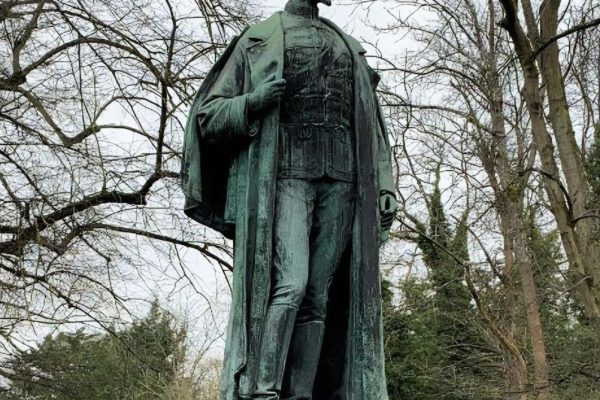
  • The Herbert Statue

    A bronze statue of George Herbert (1850-1895). The sword was allegedly removed by some American servicemen during World War II. George Herbert was the Under-Secretary of State for War, and the statue created by Alfred Gilbert RA, who was also responsible for the Shaftesbury Memorial Fountain ("Eros") at Piccadilly Circus. Herbert endowed Pembroke Technical School near Dublin and was renowned for his speech-making, pamphlet writing and an alleged youthful dalliance with Tahitian Queen "Moe".

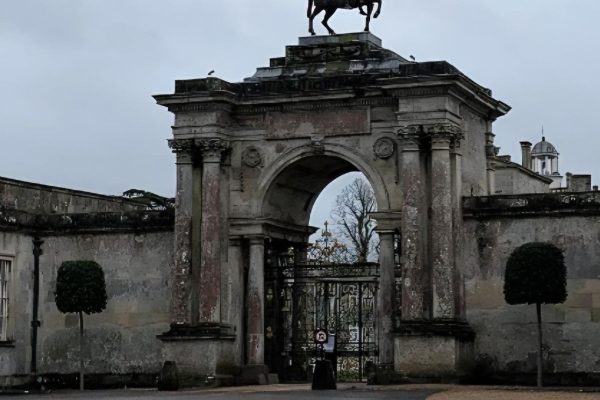
  • Triumphal Arch, Wilton House

    An early work (c1758-62), in the classical revival style, by London based Scottish architect, Sir William Chambers, whose best known works include Somerset House and the Pagoda at Kew. It originally stood on a hill to the south of the house, but was relocated to its present position in around 1801 by the architect James Wyatt, who was engaged by the 11th Earl to remodel much of Wilton House, leaving only the South Front, ascribed to Inigo Jones, unaltered. The statue of Marcus Aurelius is an exact copy of the original in Rome. Wilton House itself has been the country seat of the Earls of Pembroke since 1544, when Henry VIII presented the estates to the 1st Earl on the dissolution of the monasteries. Built on the site of the original Wilton Abbey, established by King Egbert in 871AD, part of the Tudor house remains in the current house.

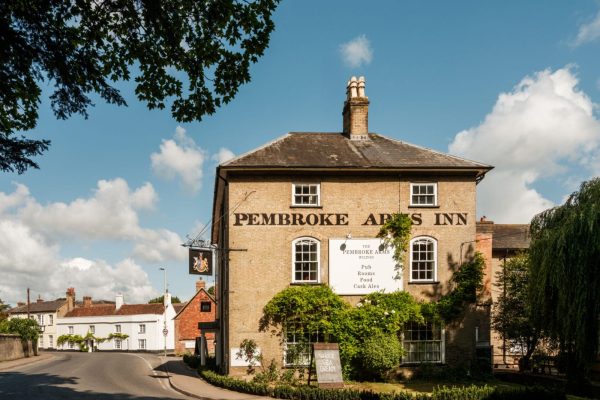
  • The Pembroke Arms

    Originally built at the end of the 18th century for visitors to Wilton House, which is directly opposite. Prior to 1840, Minster Street which separates the Pembroke Arms from Wilton House, did not exist. In 1841, the local office of the Customs and Excise were housed at the hotel. Neighbouring Minster Cottage was part of the hotel during it's heyday, to cope with the number of guests. Minster Street alludes to the original Wilton Abbey, founded in 871AD. An earlier religious institution had been founded on the same site, now part of Wilton House, in 773AD. The road passes through Kingsbury ("stronghold of the King") Square, alluding to the Kings of Wessex who, when travelling through their Kingdom, had a palace nearby. The palace, likely a wooden hall house, contained the royal archives and was from where Royal Charters were issued. By the 9th century, Wilton was the royal seat of the Kingdom of Wessex until King Alfred relocated it to Winchester. Minster Street becomes Silver Street, close to the site of the oldest mint in Wiltshire. The first Wiltshire coins, the "mall cross" coin of Edgar (960AD), great-grandson of Alfred the Great, were produced here, with the mint remaining in operation until the "long cross" coinage of Henry III when, in 1250, all provincial mints were closed.

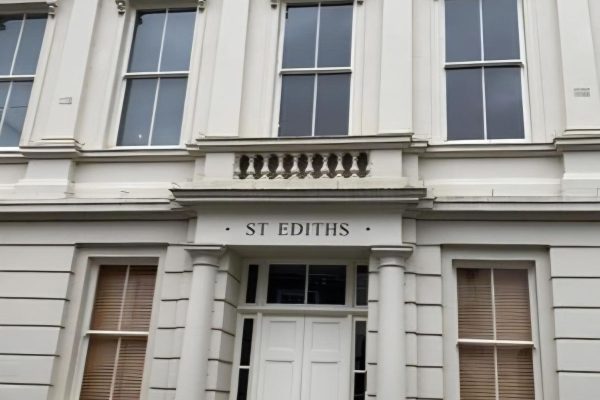
  • St Edith's Hall

    The former Methodist Reform Church, dating from 1875, was described by Pevsner as "like a Cinquecento palazzo front". When the Methodists moved to the Congregational Church in Crow Lane in 1966, the building became a Catholic church, named in honour of St Edith, Wilton's Patron Saint. From 1984 to 2004, when the Crow Lane building was converted into homes, the two congregations held services at St Edith's. Since then, it has been home to an award-winning firm of architects, with a restored exterior and radical contemporary interior, glass-walled offices and a flying staircase, inspired by MC Escher's 1951 "House of Stairs". St Edith (961-984) is the Patron Saint of Wilton. The daughter of King Edgar (943-975), of whom King Canute said "was given up to vice and a slave to lust" and Wilfrida, a woman of noble birth, whom he carried off from the nunnery at Wilton Abbey through the Saxon custom of "handfasting" (Temporary marriage).

  • The Council Offices and Chamber

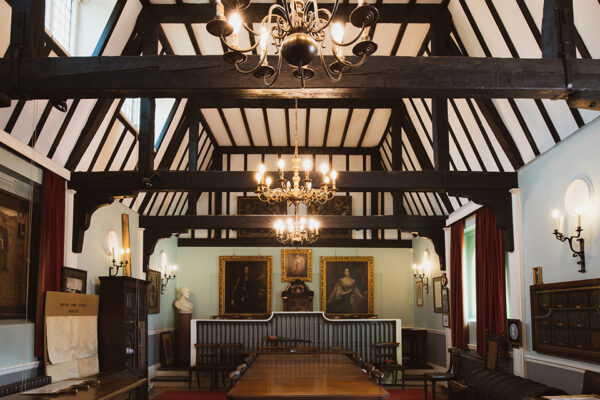
    Originally a Masonic Hall and, at one time, the home of the Wilton Temperance Society and later the Primitive Methodist Chapel, Wilton Town Council moved into the building in 1948 from the former Town Hall (now Baptist Church) on the Market Square. The Council Chamber contains a 15th century iron-bound chest, originally with four locks so it could only be opened by the Mayor and four Alderman, who were each issued their own key. There are also a number of paintings, including one of William III by Sir Godfrey Kneller, and another of Edith Olivier, by Rex Whistler.

  • The Market Cross

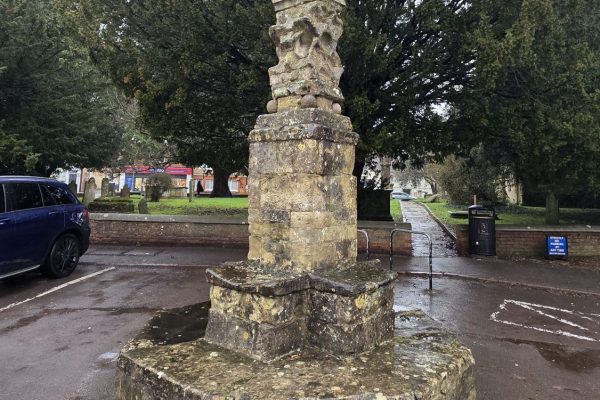
    In early times, the presence of a cross served as a guarantee to the public that traders attending markets under the sign were honest in their dealings. In its current form, it is a "curious pillar, obviously consisting of parts not belonging together, a decayed sundial and an 18th century urn on top" (Pevsner). IN the 17th century, alterations were made when, following an outbreak of the plague in 1645, it was destroyed as a Popish symbol. A column was built on the original medieval base, together with four small balls supporting an urn or sundial. This appears to have been a purely decorative work, which ignored the original use of the cross as a place for the collection of market tolls and from where important announcements were proclaimed.

  • The Old Church of St Mary

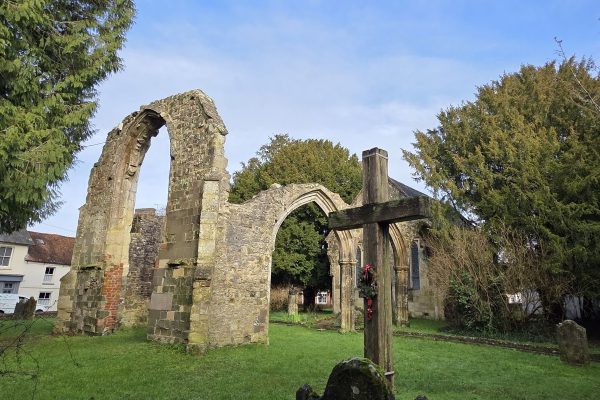
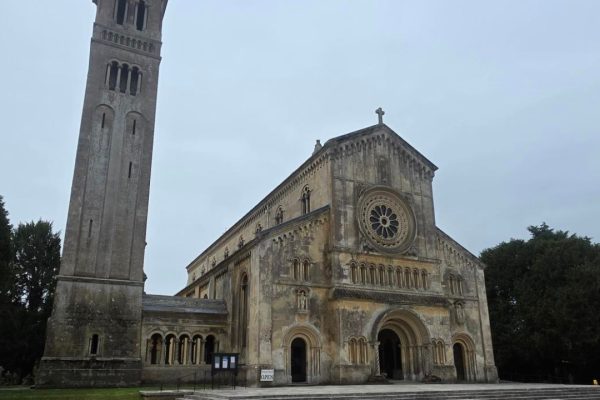
    The original Saxon parish church of Wilton, constructed at the central crossroads of the town, adjacent to the Market cross and linked to the Abbey where Wilton House now stands, St Mary's was rebuilt in the 12th century. Bishop Robert de Bingham (1180-1246), Bishop of Salisbury from 1229-1246 was ordained at St Mary's on 27th May 1229 as, although the foundation stone at Salisbury Cathedral was laid in 1220, the Cathedral was not completed until 1258 (the West front, cloister and Chapter House later still). Bingham was also responsible for the building of Ayleswade bridge in Harnham in 1244. He died in 1246 and is buried in the Cathedral. St Mary's, the most important of the twelve churches which medieval Wilton boasted, was the site of the annual Mayor Making ceremony, elected from a group of three Burgesses previously nominated by the Council. Despite further rebuilding in the 15th and 18th centuries, by 1841 this last-surviving of Wilton's medieval churches was considered to be beyond repair. The younger son of the 11th Earl, Hon. Sidney Herbert, together with his mother, the Russian-born Countess Catherine Woronzov, undertook the building of an entirely new parish church in 1845, in the Italian style. On it's completion, St Mary's was partially demolished, leaving the 12th century chancel, the first bay of the nave, and the 15th century arches at each side. The bells were transferred to the new church (but are now in a church in Australia) and the clock transferred to the Town Hall (now Baptist Church). In 1938-39, restoration work was funded by US Ambassador Bingham and family, descendants of Bishop Bingham, and in the 1970s the redundant building was transferred into the care of the Churches Conservation Trust.

  • Wilton Baptist Church

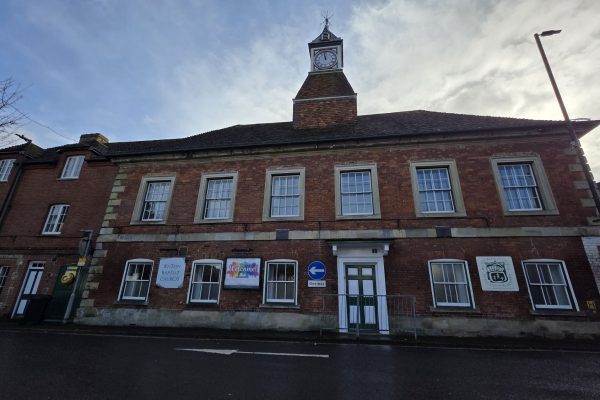
    Originally the Town Hall, this classic Georgian red-bricked designed building dates from 1738. The Victorian gothic revival clock tower was added in 1889 to house the clock from Old St Mary's. It was build on the site of an earlier Guildhall, a two-storey building with shops on the lower level. The annex on the left of the building housed the original Wilton Fire Station .

Part two coming soon…